How Internal Quality Assurance Ensures Fair, Consistent and Accredited TEFL/TESOL Training
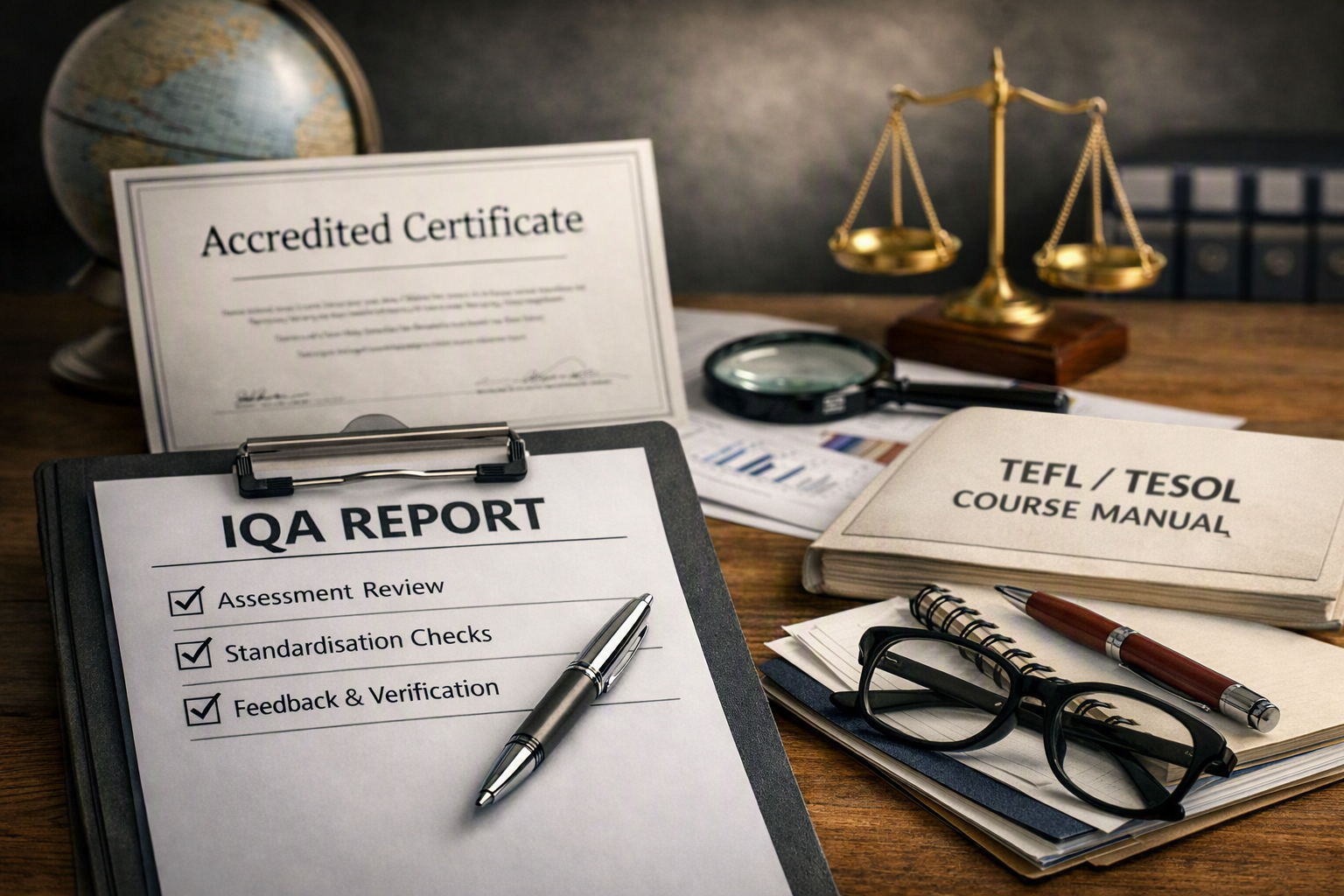
When people choose a TEFL or TESOL qualification, they’re not just buying a course — they’re trusting a training provider with their future. Accreditation matters, of course, but what sits behind that accreditation is something most learners never see: the Internal Quality Assurance (IQA) process.
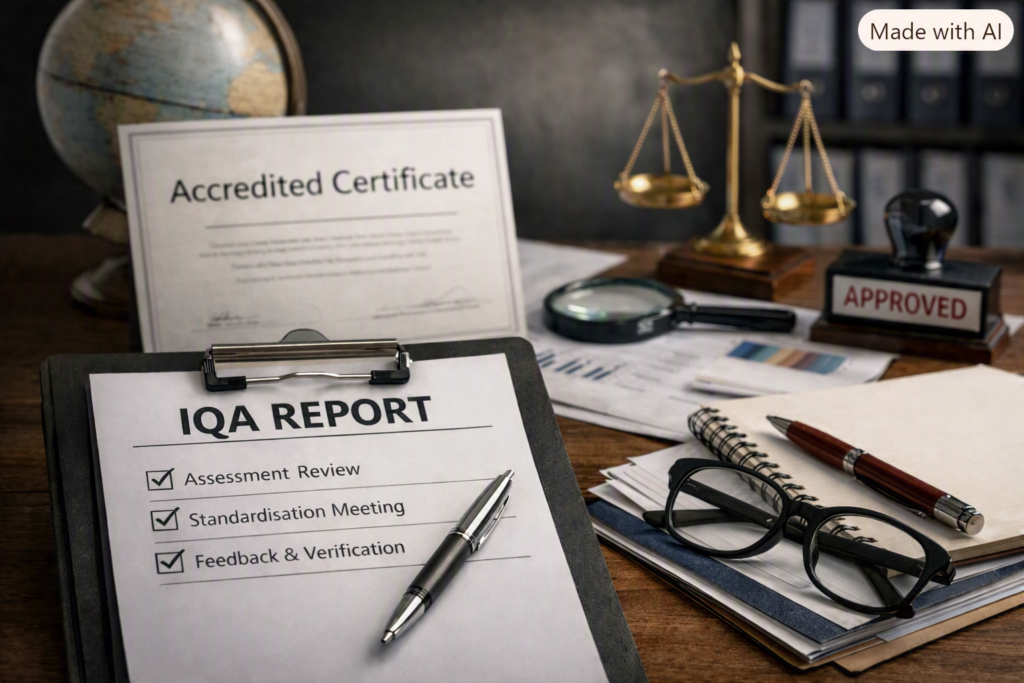
It’s not the most glamorous topic, but it’s one of the most important. A strong IQA system is the backbone of any credible training centre, and it’s the reason students can feel confident that their assessments are fair, consistent, and aligned with national standards.
At LTTC, IQA isn’t a box‑ticking exercise. It’s a continuous cycle of checking, sampling, reviewing, and improving — and it directly affects every learner who studies with us, whether they’re in Malaysia, Saudi Arabia, Egypt, Singapore, Japan, Korea, China, or anywhere else in the world.
What IQA Actually Means in TEFL/TESOL Training
Internal Quality Assurance is the structured process that ensures assessments are marked correctly, consistently, and in line with OFQUAL‑regulated standards. In simple terms, it answers three questions:
Are assessors marking fairly and consistently?
Are learners being assessed against the correct criteria?
Is the training centre maintaining the standards required by the awarding body?
For OFQUAL‑regulated qualifications, IQA isn’t optional — it’s a requirement.
👉 OFQUAL – Regulated Qualifications Framework
Our qualifications are awarded through Focus Awards, a UK‑regulated awarding organisation:
👉 Focus Awards – Regulated Awarding Organisation
Why IQA Matters for Students
Most learners never think about IQA, but they feel its impact:
Fair marking — no matter who marks your work, the standard is the same.
Clear feedback — assessors follow structured guidance, so feedback is meaningful and actionable.
Consistent experience — whether you study online or in‑person, the quality of assessment doesn’t change.
Protection against poor practice — IQA prevents inconsistent marking, unclear feedback, and assessor bias.
If you’re exploring TEFL options internationally, you can see how our standards apply in different regions:
👉 Malaysia TEFL Guide
👉 Saudi Arabia TEFL Guide
👉 Egypt TEFL Guide
How IQA Works Behind the Scenes
Although students don’t see it, IQA is a very active process. Here’s what happens in the background:
Sampling strategy
A percentage of learner work is reviewed regularly to check marking accuracy and consistency.
Standardisation meetings
Assessors meet to compare marking decisions, discuss borderline cases, and ensure everyone interprets criteria the same way.
Feedback loops
Assessors receive guidance on how to improve their marking or feedback, ensuring continuous development.
Documentation and tracking
Every check, review, and decision is recorded — not for bureaucracy, but for transparency and accountability.
External verification
Awarding bodies review samples and IQA records to confirm that standards are being met.
If you’re interested in becoming an assessor or verifier yourself, the following are suitable qualifications:
👉 Level 3 Assessor Award
👉 Level 4 Internal Verifier Award
👉 Level 4 External Verifier Award
Why IQA Strengthens Accreditation and Trust
Accreditation is only as strong as the processes behind it. IQA demonstrates:
Expertise — showing that assessors and verifiers are trained, qualified, and monitored.
Transparency — learners know their work is treated fairly.
Consistency — essential for international students comparing providers across countries.
Credibility — especially important for employers who rely on TEFL/TESOL qualifications when hiring.
For learners exploring advanced qualifications, our TESOL Diplomas are built on these same quality principles:
👉 Level 5 TESOL Certificate
👉 Level 6 TESOL Diploma This is a CPD course.
If you need international recognition guidance, UK ENIC provides official comparison statements:
👉 UK ENIC – Qualification Recognition
What Happens When Training Centres Don’t Have Proper IQA
Unfortunately, not all TEFL providers follow structured IQA. When they don’t, problems appear quickly:
Inconsistent marking
Confusing or unhelpful feedback
Learners being passed or failed incorrectly
Complaints that can’t be resolved
Loss of accreditation or recognition
These issues are common in non‑regulated TEFL providers, and they’re exactly what IQA is designed to prevent.
How IQA Supports International Learners
For students in Malaysia, Saudi Arabia, Egypt, Singapore, Japan, Korea, and China, IQA provides reassurance that:
The qualification meets UK standards
The assessment process is fair
The certificate will be respected internationally
The training centre is accountable to an awarding body
Explore our international TEFL/TESOL guides:
👉 Singapore TEFL Guide
👉 Japan TEFL Guide
👉 Korea TEFL Guide
👉 China TEFL Guide
Why We’re Open About Our IQA Process
Most training centres never talk about IQA. We think that’s a mistake.
Learners deserve to know how their work is assessed and what safeguards are in place to protect them. Being transparent about IQA isn’t just good practice — it’s good education.
And from an SEO perspective, educational content like this performs significantly better than company announcements or promotional posts. People search for how accredited courses maintain quality, not for internal updates. By explaining IQA clearly, we’re answering real questions that learners ask.
Final Thoughts
IQA might not be the most exciting topic, but it’s one of the most important parts of accredited TEFL/TESOL training. It protects learners, supports assessors, strengthens accreditation, and ensures that every qualification we award meets the standards expected in the UK and internationally.
Behind every certificate is a process — and IQA is the part that guarantees quality, fairness, and trust.